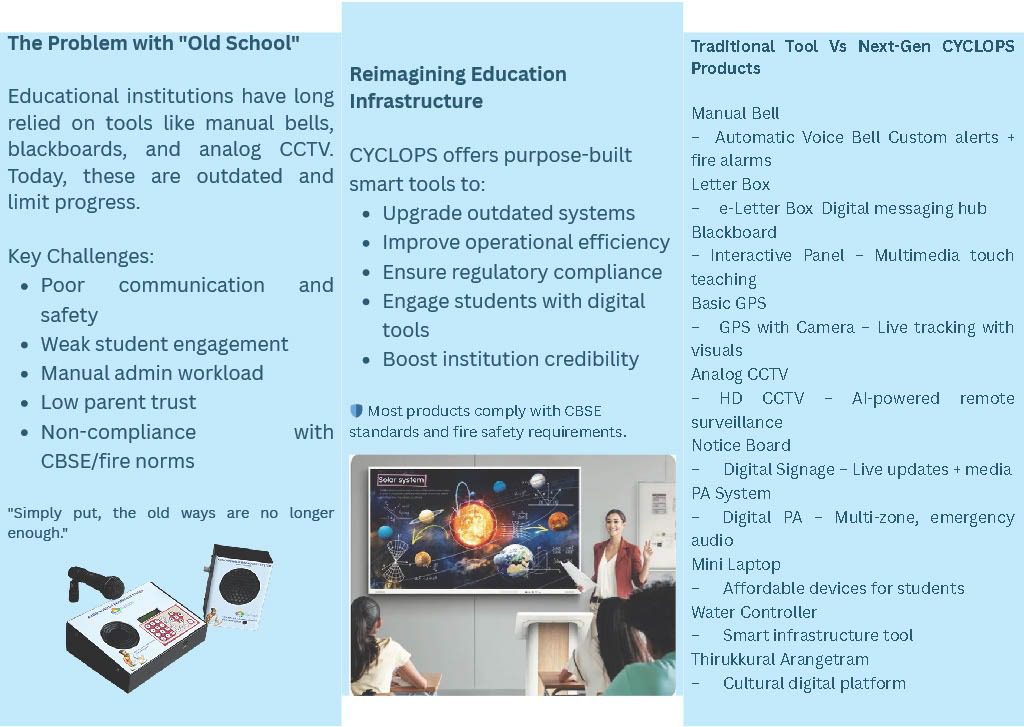

The Indian educational sector is transitioning from simple digitization to holistic digital transformation. As we look into 2025–2026, forward-thinking institutional leaders—Principals, Vice Principals, Trustees, and Management teams—are no longer viewing technology as a mere operational upgrade but as a strategic asset for competitive advantage. The focus has decisively shifted toward implementing Smart Campus Solutions that unify learning, safety, administration, and stakeholder engagement into a single, high-efficiency ecosystem.
Staying ahead of this curve is no longer optional; it is a prerequisite for driving institutional ranking, ensuring compliance, and delivering measurable value to a discerning student and parent base.
The integration of Artificial Intelligence (AI) has moved beyond basic record-keeping to become a tool for pedagogical optimization. AI-powered Classroom Management Systems (CMS) and Learning Management Systems (LMS) provide actionable intelligence, transforming raw data into strategic insights.
Impact Metrics for Management:
This shift empowers leaders to move from reactive management to AI-enabled strategic decision-making that directly correlates with improved academic outcomes and institutional prestige.
Campus safety has evolved from simple CCTV monitoring to a comprehensive Risk Mitigation Strategy powered by AI and IoT (Internet of Things). Smart Safety & Surveillance systems are now a non-negotiable component of a modern campus infrastructure.
Key Features of Modern Platforms:
Implementing these integrated platforms demonstrates a commitment to proactive safety governance, which is a critical factor in attracting and retaining student talent.
Modern parents and students demand a frictionless experience (PX). Institutions are investing in unified digital platforms to streamline communication, finance, and feedback, thereby enhancing trust and reputation.
Operational Streamlining:
Technology extends the campus’s influence beyond its physical boundaries, making Digital Visibility central to enrollment strategy and branding.
A strong, professional digital presence is the foundation for establishing greater credibility and a perception of innovation within the education community.
The adoption of Robotic Process Automation (RPA) for daily operations minimizes human error and significantly boosts administrative efficiency.
Forward-thinking leadership teams treat investment in integrated EdTech not as a depreciating operational expense, but as a strategic capital investment with a clear ROI:
Investment Area | Primary ROI Metric | Strategic Benefit |
Reduction in faculty administrative hours | Improved faculty satisfaction, higher teaching quality | |
Reduced incident response time, compliance adherence | Enhanced parent confidence, mitigated legal/operational risk | |
Accelerated fee collection, reduced error rate | Improved cash flow, enhanced financial transparency | |
Increase in qualified admissions inquiries | Higher student enrollment and institutional ranking |
Institutions that prioritize this unified, technology-first approach are positioned to establish themselves as progressive market leaders who are actively shaping the future of education in the region.